The “Beeb” Revolution: A Tribute to the BBC Micro and Acorn Computers
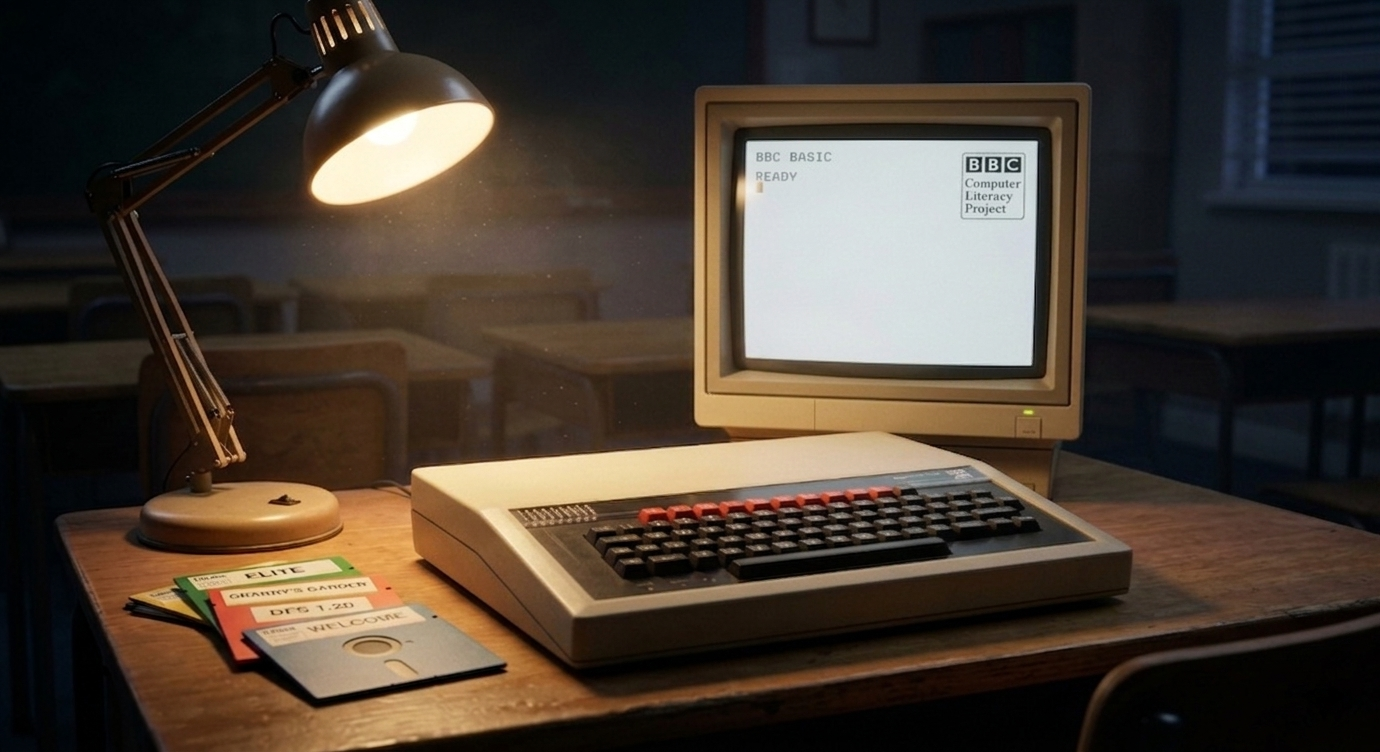
If the Commodore 64 ruled the American basement and the Sinclair ZX Spectrum dominated the British bedroom, the BBC Micro owned the British classroom. Commissioned by the BBC for the Computer Literacy Project, this “ruggedized” powerhouse by Acorn Computers became the gold standard for build quality and educational versatility in the 1980s.
The British Broadcasting Corporation Microcomputer System, or BBC Micro, is a series of Microcomputers designed and built by Acorn Computers Limited in the 1980s for the Computer Literacy Project of the BBC. Designed with an emphasis on education, it was notable for its ruggedness, expandability, and the quality of its operating system. An accompanying 1982 television series, The Computer Programme, featuring Chris Serle learning to use the machine, was broadcast on BBC2.
After the Literacy Project’s call for bids for a computer to accompany the TV programmes and literature, Acorn won the contract with the Proton, a successor of its Atom computer prototyped at short notice. Renamed the BBC Micro, the system was adopted by most schools in the United Kingdom, changing Acorn’s fortunes. It was also successful as a home computer in the UK, despite its high cost. Acorn later employed the machine to simulate and develop the ARM architecture.
While nine models were eventually produced with the BBC brand, the phrase “BBC Micro” is usually used colloquially to refer to the first six (Model A, B, B+64, B+128, Master 128, and Master Compact); subsequent BBC models are considered part of Acorn’s Archimedes series.
The “Model B” Standard: Over-Engineered Excellence
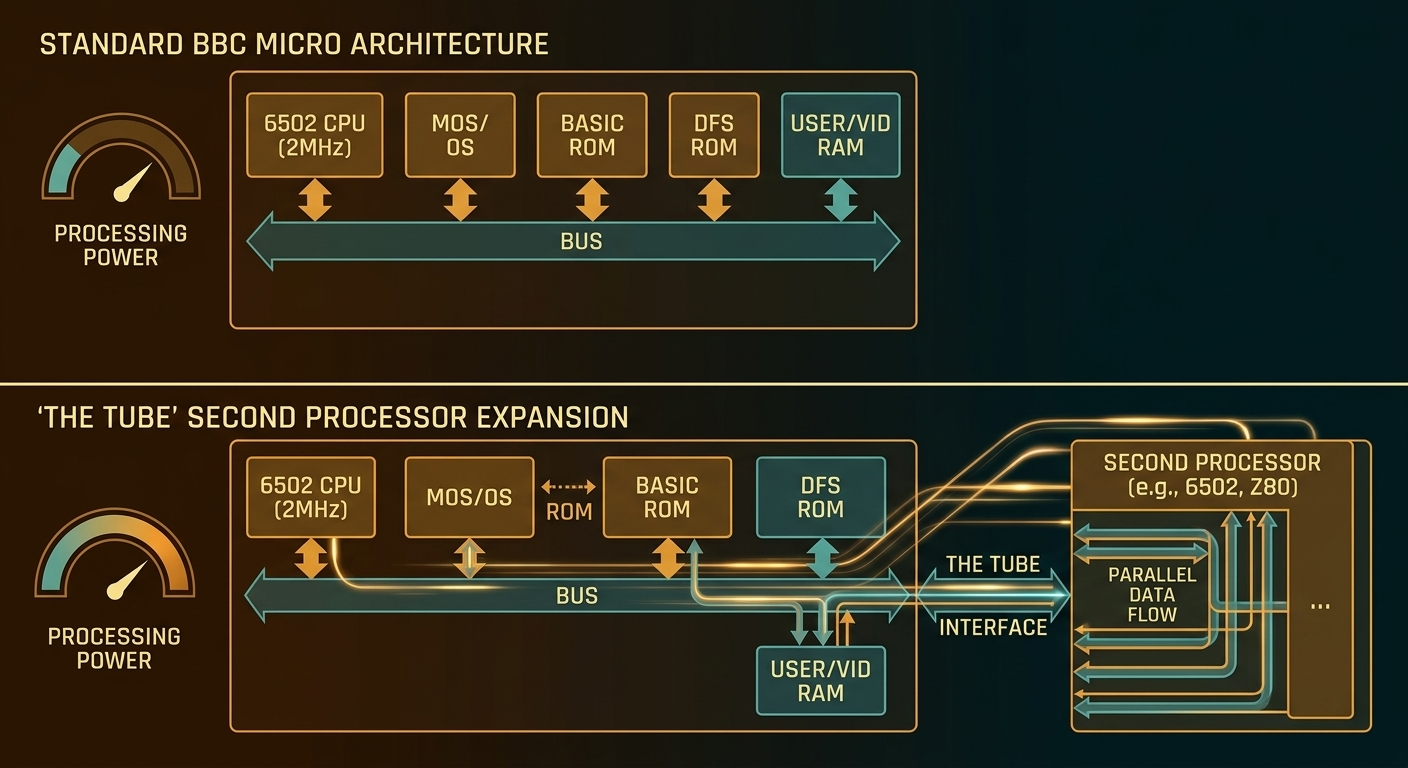 The BBC Micro (specifically the Model B) was significantly more expensive than its rivals, but for good reason. It was built like a tank and featured a wealth of I/O ports that made it a favorite for lab experiments and robotics.
- The MOS Technology 6502: Running at 2MHz, it was surprisingly snappy compared to other 6502-based machines.
- The Tube: A unique expansion port that allowed for “second processors,” effectively letting the Beeb act as a terminal for even more powerful hardware.
- BBC BASIC: Widely regarded as the best, most structured version of BASIC available on any 8-bit micro, encouraging good programming habits in a generation of students.
The Expansion of an Empire: Master 128 and the Archimedes
Acorn didn’t stop with the classroom. They pushed the architecture to its limits:
- BBC Master 128 (1986): The ultimate 8-bit evolution. With 128K RAM and internal expansion sockets for ROMs, it was the professional’s choice for word processing and spreadsheet work in the UK.
- Acorn Archimedes (1987): A massive pivot. The Archimedes introduced the world to the ARM (Acorn RISC Machine) architecture. It was the first RISC-based home computer, offering performance that made 16-bit machines like the Amiga and ST look sluggish in comparison.
The Birth of a Giant: From Acorn to ARM
The legacy of the BBC Micro isn’t just in the hardware you can see—it’s in the chips that power the world today. The R&D work done at Acorn to create a more efficient processor led to the birth of ARM. Today, the descendant of that Acorn RISC Machine powers nearly every smartphone on the planet.
The Software That Defined the Platform
- Elite: David Braben and Ian Bell’s space-trading masterpiece was born here. The BBC Micro version remains the gold standard for many, featuring wireframe 3D graphics that felt like magic in 1984.
- Granny’s Garden: If you went to school in the UK in the 80s, you remember the terrifyingly high-pitched “danger” music and the quest to find the Ravens.
- Repton: A sophisticated puzzle-game series that showed off the Beeb’s high-resolution “Mode 2” graphics and smooth movement.
The “Sideways” Logic: ROM Slots and Reliability?
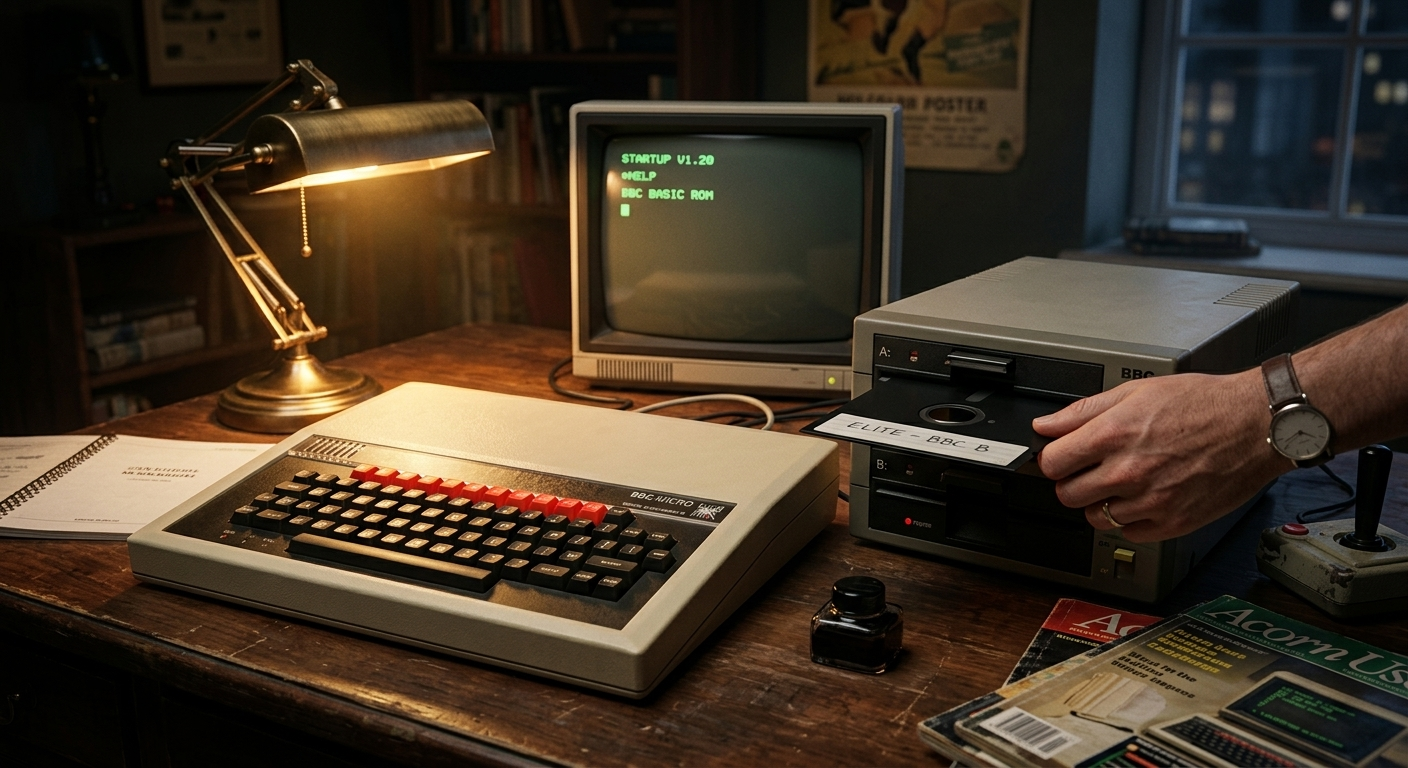 The BBC Micro was famous for its “Sideways ROM” system. Instead of loading every utility from tape or disk, you could plug chips directly into the motherboard, giving you instant access to word processors (Wordwise) or filing systems (DFS).
Maintain Your Beeb
Is your BBC Micro suffering from a smoky RIFA capacitor or a failing power supply? Visit our
BBC Micro Technical Hub for essential safety capacitor kits, ROM upgrades, and high-quality disk drive parts!