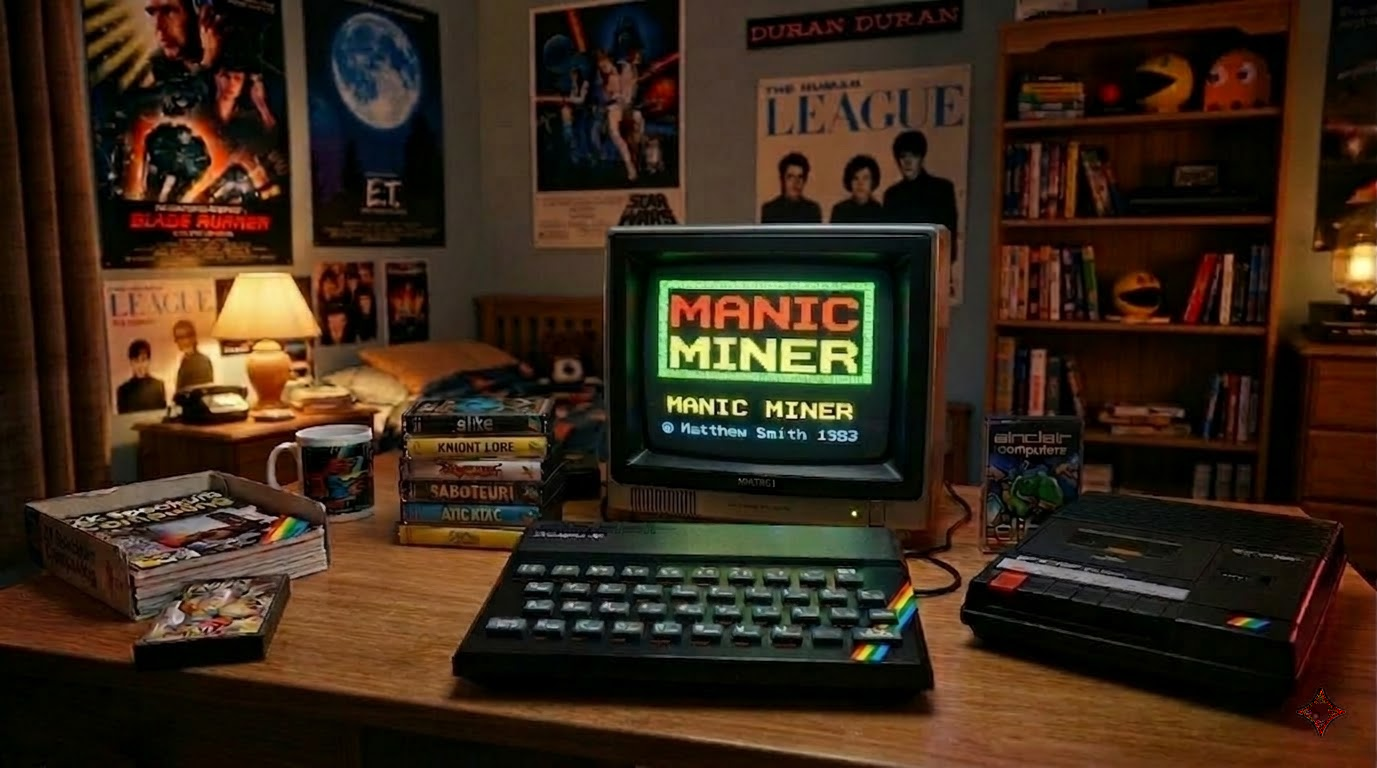
The Rubber-Keyed Revolution: How the Sinclair ZX Spectrum Built an Empire
The history of the Sinclair ZX Spectrum dates back to the early 1980s, the dream of a “computer in every home” felt like pure science fiction. Then came Sir Clive Sinclair and the ZX Spectrum. Launched in 1982, this diminutive machine with its iconic rainbow stripe didn’t just sit on desks—it ignited a creative explosion that changed the UK’s tech landscape forever.
Innovation Born from Constraint: The “Colour Clash” Magic
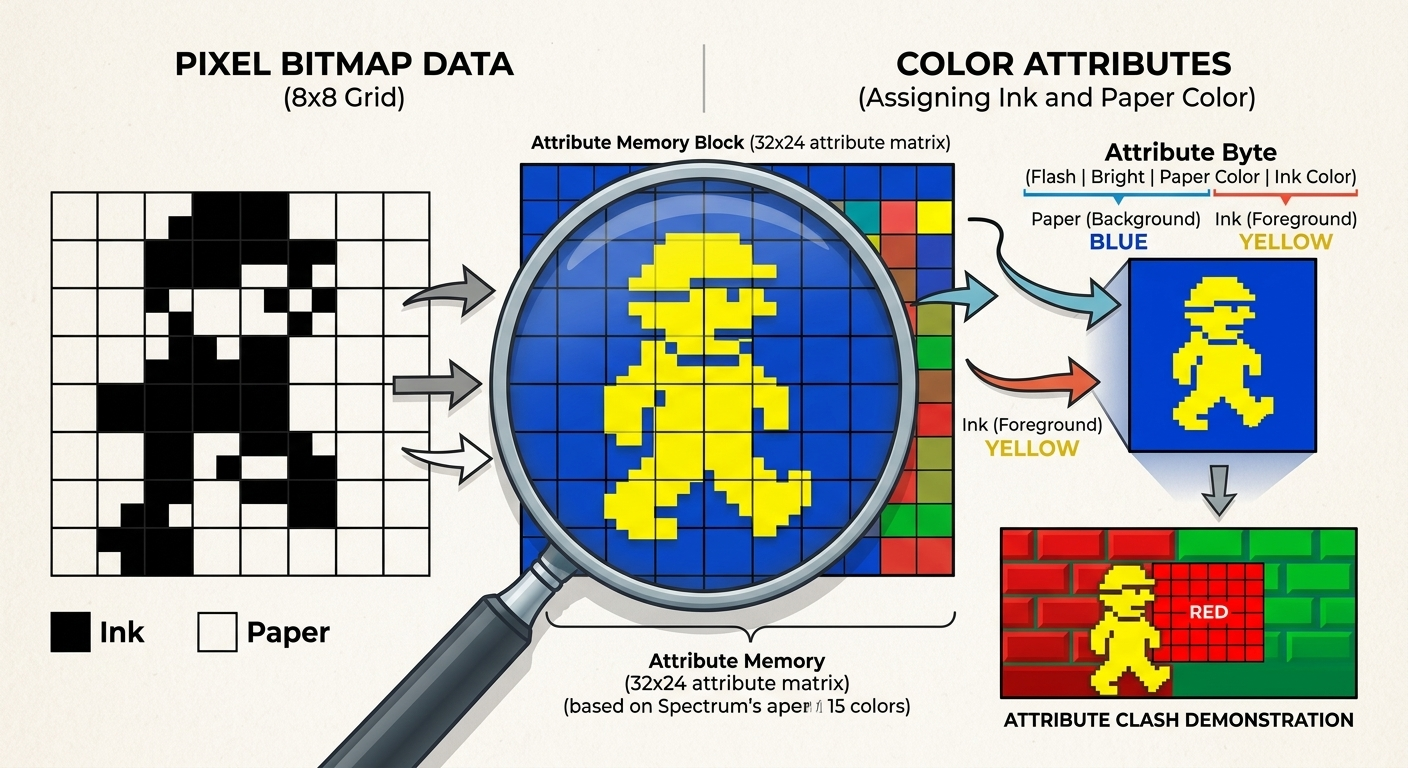 The Spectrum was designed with a singular goal: affordability. To keep costs down, Sinclair’s engineers used a clever but quirky way to handle graphics. Instead of giving every pixel its own colour, the machine assigned colours to 88 pixel blocks (attributes).
This led to the legendary “attribute clash”—where a moving character might suddenly turn the color of the wall behind them. While technically a limitation, it forced developers to be incredibly creative. It gave Spectrum games a high-contrast, vibrant, and neon-soaked aesthetic that remains instantly recognizable to this day.
The “Bedroom Coder” Legacy: A Generation of Creators
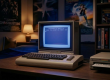
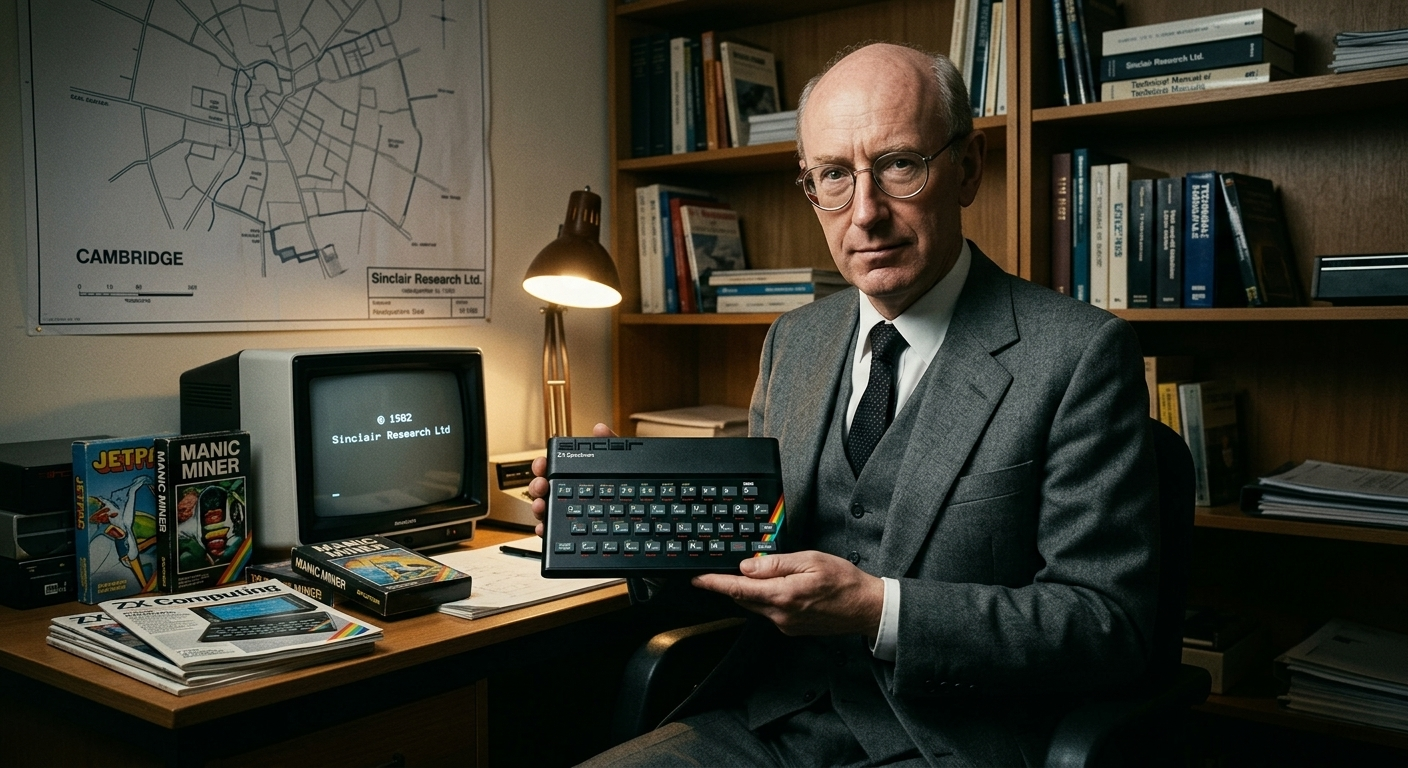 Unlike modern consoles that are “closed boxes,” the Spectrum was an open invitation to create. Every time you turned it on, you were greeted by the 1982 Sinclair Research Ltd prompt, ready for you to type in Sinclair BASIC.
This accessibility birthed the “Bedroom Coder” phenomenon. Teenagers across the country were writing code, duplicating tapes, and starting software houses from their parents’ spare rooms. Icons like Ultimate Play the Game (which later became Rare) and Codemasters got their start right here. The Spectrum didn’t just teach people how to play games; it taught a generation how to build them.
The Great Tape-Loading Era: Games That Defined the Spectrum
No history of the “Speccy” is complete without the games. Because the hardware was so affordable, the software library exploded with experimental, bizarre, and brilliant titles that pushed the Z80 processor to its absolute limits. Here are the heavy hitters that every Spectrum owner remembers loading:
- Manic Miner & Jet Set Willy: Matthew Smith’s masterpieces are the gold standard of 8-bit platforming. Manic Miner introduced Miner Willy and a surreal world of killer telephones. Its sequel, Jet Set Willy, was one of the first “open-world” platformers, letting you explore a massive mansion. They were punishingly difficult but utterly addictive.
- Jetpac (Ultimate Play the Game): Before they were known as Rare, the Stamper brothers founded Ultimate Play the Game. Jetpac was a masterclass in smooth, fast-paced action. You had to assemble your rocket, fuel it up, and blast off while fending off waves of aliens. Its clean graphics felt light-years ahead of other early titles.
- Knight Lore: When Knight Lore hit the shelves in 1984, it blew people’s minds. Using the “Filmation” engine, it created a 3D-looking world that felt solid. Playing as Sabreman, you had to find a cure for your lycanthropy. It was atmospheric, spooky, and showed that the Spectrum could handle complex 3D space.
The Evolution: From 16K to the Amstrad Era
The Spectrum wasn’t a static machine; it evolved alongside its users:
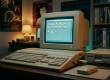
- The Classics (16K/48K): The original “rubber key” models that started it all.
- The ZX Spectrum+: Introduced a much-needed hard plastic keyboard.
- The 128K “Toastrack”: Named for its iconic external heatsink, this model brought better sound (via the AY chip) and more memory.
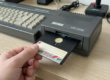
- The Amstrad Era (+2 & +3): After Amstrad bought the brand, we saw the “all-in-one” models with built-in tape decks and even a 3-inch disk drive.
The Verdict
The ZX Spectrum was more than just plastic and silicon; it was a democratic tool for the digital age. Whether you were waiting ten minutes for a tape to load or staying up all night debugging a program written in BASIC, the “Speccy” proved that you didn’t need a massive budget to change the world—you just needed a little bit of RAM and a lot of imagination.
Revive Your Sinclair
From unresponsive “rubber keys” to failing ULA chips, we have the specialized parts your Spectrum needs. Explore our ZX Spectrum replacement parts for new membranes, vLA82 chips, and full recap kits!